
Major expansion planned for waste transfer station that serves Indio
The expansion, which still requires formal approval, addresses concerns about the aging infrastructure of the current facility, which has been in operation for 25 years.
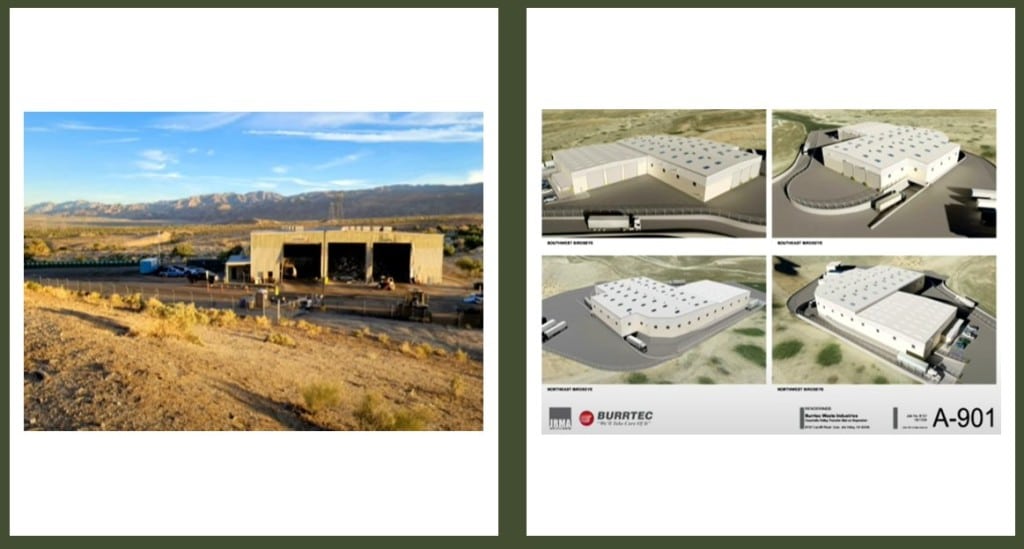
The Coachella/Indio Waste Transfer Station Authority hopes to move forward with plans for a significant expansion that would triple the facility’s capacity and nearly quadruple its size. The expansion is designed to accommodate growing waste management needs in Indio and Coachella for the next 30 years.
Sarah Toyoda, Indio’s environmental programs coordinator, presented details of the proposed expansion during a Monday morning study session. The project would increase the transfer station’s permitted capacity from 1,100 tons per day to 3,000 tons and expand the facility from just over 14,000 square feet to more than 40,000 square feet.
“Basically this expansion designed by Burrtec is designed for the next 30 years,” Toyoda said. “It’s a huge increase in square footage from a little over 14,000 to over 40,000. It increases the tipping floor from over 9,000 to over 37,000 square feet.”
The expansion addresses concerns about the aging infrastructure of the current facility, which has been in operation for 25 years. According to Toyoda, Burrtec previously outlined how growth in the cities served by the transfer station will soon outpace what the current facility can process.
A key advantage of the expansion plan is that the new transfer station would be built adjacent to the existing one, allowing operations to continue uninterrupted during construction.
“This new transfer station is going to be built next to the current station,” Toyoda said. “That means basically that there wouldn’t be any disruption in the service. We would continue to use the old one while they built the new one right next to it and then just move the material over when it’s done.”
The proposed expansion does not come without financial implications. The project would be governed by a new 30-year lease agreement running until July 1, 2055, with construction costs not to exceed $10.7 million. While gate fees would need to increase, it’s not clear yet whether that price hike would have an impact on residential customers. Exact details will be solidified at a future meeting.
Burrtec is also requesting a change in how annual adjustments are calculated, shifting from the Los Angeles, Riverside, San Bernardino Consumer Price Index (CPI) to a water, trash, and sewer CPI. Toyoda noted that over a 14-year analysis period, the average for the current CPI was 2.9% while the water, sewer, trash index averaged 4.4%.
“They felt that that was more realistic of an adjustment each year,” Toyoda said, adding that “for every dollar that this increases, it roughly translates to about 10 cents in the actual waste rates.”
“This new transfer station is going to be built next to the current station. That means basically that there wouldn’t be any disruption in the service.”
— Sarah Toyoda, Indio environmental programs coordinator
The expansion plan also includes a commitment fee from Burrtec to the JPA, which would be separate from the gate fee. This fee represents an extended lease payment that Burrtec has been paying to Riverside County and would now pay to the JPA.
The Authority is also considering purchasing the land for the expansion from Riverside County, though the exact cost remains unknown.
“We have talked to Riverside County, they have appraisers up there working on it, but I don’t know when that will come in,” Toyoda said. “They don’t have to give us an actual appraisal until August if they really wanted to do that. But they are working on it.”
The Authority must now decide how to fund the land purchase. Options include using reserve funds, adding the cost to the gate fee, or redirecting disbursements. The JPA has been building up unrestricted funds over the years in anticipation of purchasing the land.
Timing is another critical factor. If the Authority wants the new agreements and rates implemented by July 1, members need to move quickly with approvals.
The Authority expressed support for moving forward with the timeline to implement changes by July 1, and indicated a preference for incorporating the land cost into the gate fee.
“Having that timeline so that we can have a 7-1 effective date would be good, especially you don’t want to wait a whole another year. And cost of building stuff might double by that time,” noted one commissioner.
The Authority is expected to meet again in April to consider formal approval of the expansion plans and associated agreements.
Author

Related Articles

Indio council delays vote on 1.8 million-square-foot warehouse project after marathon meeting
Nearly 20 residents testified during a meeting that stretched almost seven hours and past midnight before the council sent the Oasis at Indio proposal back for a smaller industrial footprint.

Indio weighs changes to Highway 111 specific plan as housing development lags behind commercial growth
Four years into Indio’s Highway 111 Corridor Specific Plan, city planners report that commercial projects are outpacing residential development. Planning commissioners reviewed potential code updates Wednesday.

Indio approves 240-unit affordable apartment complex near Jefferson Street
The Indio Planning Commission unanimously approved the Avenue 42 Apartments, an eight-building complex featuring 237 income-restricted units. Rents will range from roughly $650 for a one-bedroom to over $2,000 for a four-bedroom.