
State marks milestone with filling of expansion pond at Salton Sea
The project aims to restore habitat and reduce dust from exposed lakebed that impacts air quality in Imperial Valley.
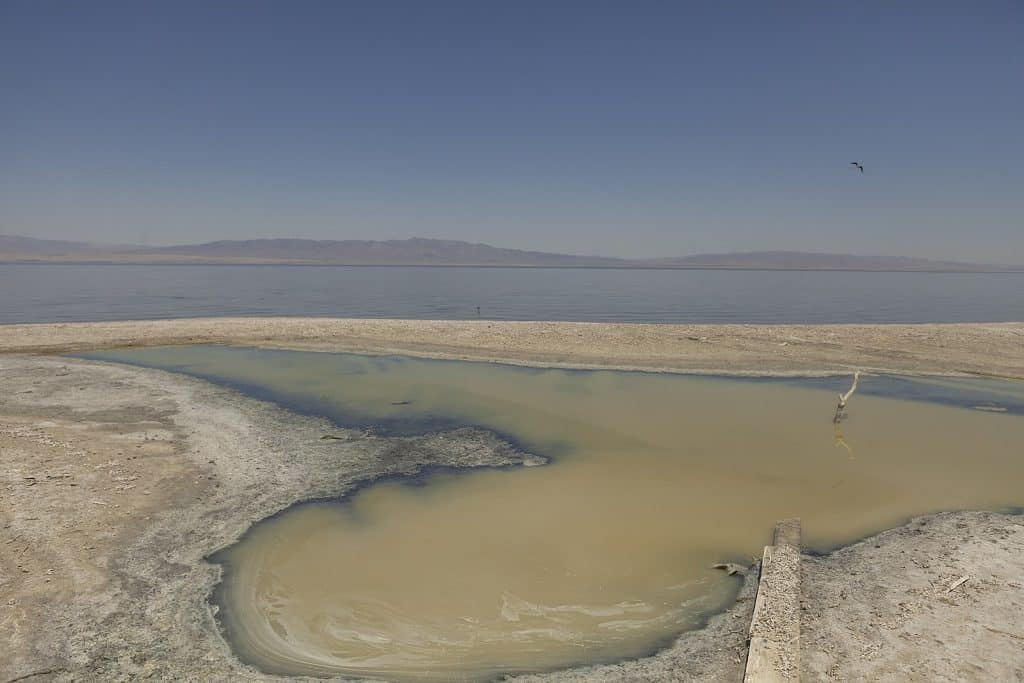
With the push of a button, the Salton Sea’s first expansion pond started filling up with water, flooding the previously dry lakebed and marking a major step forward in the restoration of the state’s largest lake.
Last week, leaders from local, state, federal, tribal and nonprofit organizations gathered to mark the filling of the East Pond Expansion at the Salton Sea as part of California’s restoration effort.
With a mix of saltwater from the lake and freshwater from the New River, the water being pumped in for the project will reduce salinity, making the habitat friendlier to wildlife and decreasing exposure of the toxic lakebed.
The project has been in the works for more than a decade. In a statement, Gov. Gavin Newsom called it “the first major restoration project the Salton Sea has ever seen.”
With the filling of the expansion pond, officials say it’s tangible proof that work is finally being done to alleviate the problems from the shrinking salty lake.
“Today, we can point to clear progress being made to improve conditions in the Salton Sea, which is critical to the health and economies of the Imperial and Coachella Valleys,” said State Water Board Chair E. Joaquin Esquivel.
The East Pond Expansion is a key component of the Species Conservation Habitat Project, which is set to restore approximately 14 square miles of vital habitat when fully built out.
Originally budgeted for $200 million, funded mainly through bonds, the project has more than doubled in size from its original scope after the state secured $245 million in additional federal funding.
The Salton Sea has shrunk in recent years due to reduced inflows, creating exposed lakebed that releases dust particles contaminated by farm runoff that worsens air quality in the Imperial Valley. The reduced water levels and increased salinity also harm habitat for wildlife, including birds traveling the Pacific Flyway.
The filling of the East Pond Expansion, combined with the original East Pond filled in early April, means approximately 2,000 acres of the project will be operational in the coming weeks.
The total project footprint now spans over 9,000 acres and will create a network of ponds, berms, nesting and loafing islands, and water delivery systems to sustain fish and bird populations. The expansion will restore ecosystem function and protect air quality by reducing dust from previously exposed lakebed areas.
Author

Related Articles

Indio police to get more drones for CV Link patrols
The extra drones come amid a valley-wide push for more surveillance tech like Flock cameras.
Indio targets $27.5M state grant for solar homes, EV chargers, and new trails
After a failed earlier bid, Indio is revamping its strategy for a multimillion-dollar state climate grant that could fund solar, EV charging, walking trails and other green projects.
Riverside County approves $10.3 billion budget, drawing on reserves as departments warn of funding gaps
From pauses in hiring countywide to the future of senior meal programs, Riverside County’s newly approved $10.3 billion budget reveals how deep funding gaps will force tough choices on local services.