
Indio Planning Commission weighs in on 4,600-acre annexation plan for a new industrial hub
Commissioners favored a plan that would make 4,600 acres east of Dillon Road part of Indio. Staff said the preferred plan would add 4.5 million square feet of industrial space and create an estimated 5,000 new jobs.
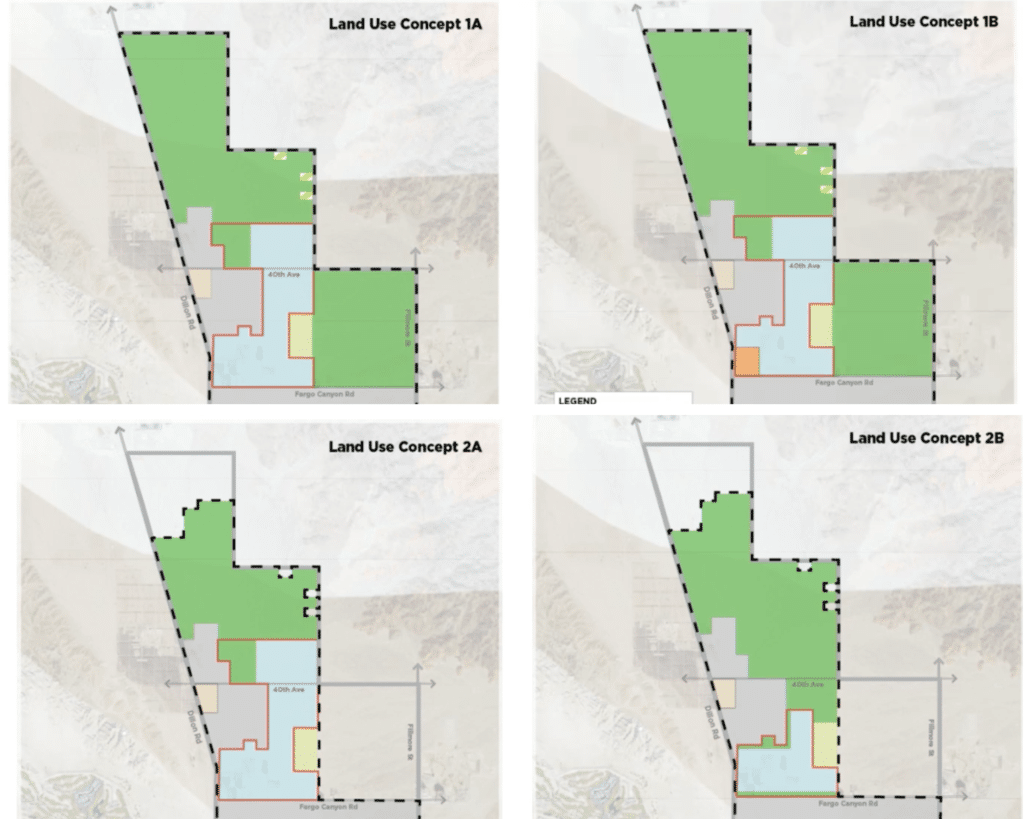
Indio’s Planning Commission on Wednesday reached informal consensus favoring the largest of four proposed concepts for annexing 4,609 acres of unincorporated land east of the city to expand industrial and business development.
The recommendation will be forwarded to the City Council, which is scheduled to select a preferred annexation concept next week. That decision would form the basis for an environmental impact report and a formal application to the Riverside Local Agency Formation Commission (LAFCO).
The area under study, known as the East Indio Employment Corridor, sits within the city’s Eastern Sphere of Influence and is bordered roughly by Dillon Road to the west, Fargo Canyon Road to the south and Fillmore Street to the east. Staff described the land as largely vacant, with some agricultural operations, a quarry and a date garden.
The impetus for the annexation, according to staff, is that industrial-zoned land makes up only 1.6% of Indio’s parcels, and about 84% of Indio residents commute outside the city for work.
Four concepts were presented to the commission, all preserving open space and conservation land while allowing light industrial, office and retail development. They differ in the size of the annexation boundary, whether housing is included and whether conservation and federal lands are annexed.
Concept 1A, the option commissioners favored, would annex the full 4,609-acre sphere of influence and dedicate a 582-acre development core exclusively to employment uses. Estimates project about 5,049 new jobs and 4.5 million square feet of industrial space, with an annual fiscal return of $2.24 million.
“The 1A seems to give us the most flexibility, the most ability to make decisions, and still have influence over those areas that are so closely related to the task,” Chair Gloria Franz said.
A related option, Concept 1B, uses the same annexation boundary but reallocates part of the development area to housing, adding roughly 722 workforce housing units while producing the highest projected tax revenue and infrastructure costs of the four concepts.
Two more limited options, concepts 2A and 2B, would shrink the annexation area to 2,650 acres by excluding open space, agricultural land and federally owned parcels, with 2B further reducing the development core to 300 acres.
“I also would like to see housing, but in that area the cost to provide services and to go out to that community would increase the cost pretty significantly,” Commissioner Michael Slater said.
A Technical Advisory Committee that met Aug. 6 also favored Concept 1A for its long-term strategic benefits, with members noting that housing needs could largely be met through infill development elsewhere in the city rather than through the annexation.
The City Council’s Aug. 19 direction will determine which concept moves forward for environmental review and the Riverside LAFCO annexation application, which city officials anticipate submitting by spring 2027.
Author

Related Articles
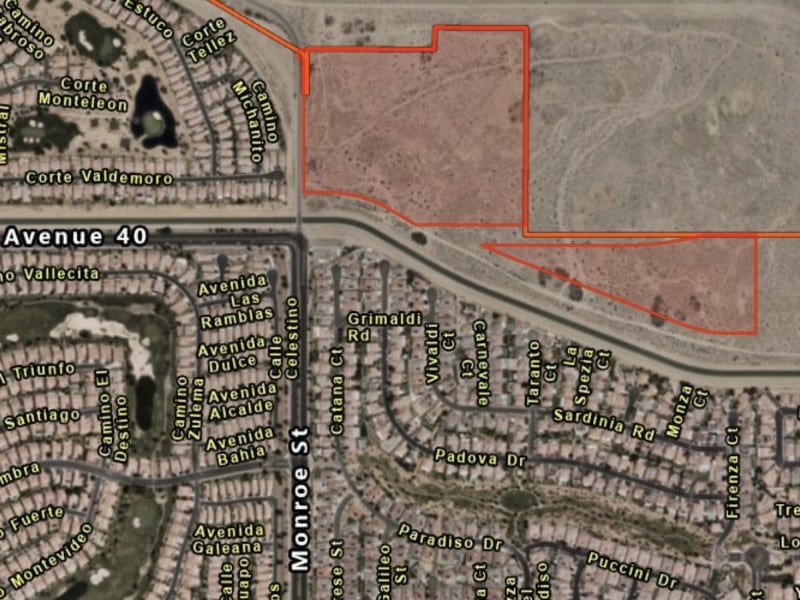
Stalled subdivision gets another year while a canal bridge awaits approval
An Indio commission extended plans for the 146 home Affresco West map one more year, its fourth city extension since 2019, as the owner awaits water district and federal approvals.
Indio Planning Commission backs larger ADUs, with bonus space for affordable rentals
Commissioners recommended expanding accessory dwelling unit size limits up to 1,300 square feet for market-rate units and 1,500 square feet for affordable rentals.

Indio council delays vote on 1.8 million-square-foot warehouse project after marathon meeting
Nearly 20 residents testified during a meeting that stretched almost seven hours and past midnight before the council sent the Oasis at Indio proposal back for a smaller industrial footprint.