
Indio City Council acts to restore trust with new immigration enforcement transparency policy
Councilmembers and the Indio Police Chief said the policy exists to reassure residents that they can access city services without fear.
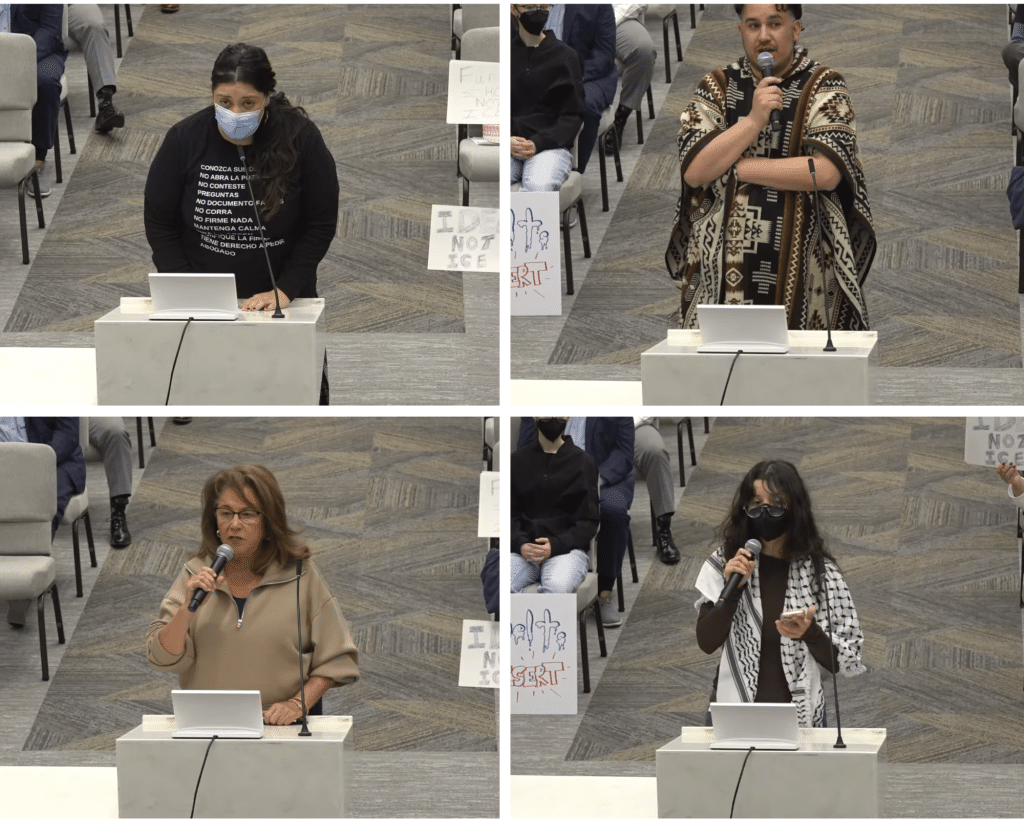
The Indio City Council voted Wednesday to adopt a resolution restating and clarifying the city’s policies regarding cooperation with federal immigration authorities, aiming to bolster community trust and ensure all residents can access municipal services safely.
The resolution was introduced following a direct request from the City Council during its Feb. 4 meeting and was drafted to address community concerns regarding how the city interacts with federal immigration agents.
The approval follows weeks of advocacy from local community groups who called for clearer boundaries between local police and federal immigration officers.
Councilmember Oscar Ortiz highlighted the necessity of the measure, saying that regular law enforcement activities have caused panic in communities throughout the city.
“It provides a distrust, an issue, for our law enforcement where people may not be willing to talk to our law enforcement when there’s real issues in our community,” he said.
He also shared that legal residents are too afraid to seek help even from municipal services like code enforcement for fear of being arrested by immigration officials.
This resolution, he said, will go a long way toward reassuring people that they can feel safe to access city services and seek law enforcement help.
Police Chief Brian Tully told the council and the public that the department’s focus remains on local public safety. Tully stated that the department “definitely do not and cannot be involved in the immigration enforcement process.”
The resolution states that Indio is a city where all residents should be able to seek law enforcement protection and municipal services without fear. A primary component of the new policy establishes specific protocols for transparency and the public disclosure of records.
Under the new guidelines, any city-owned record that documents federal civil immigration enforcement activities within the city’s jurisdiction is now officially deemed a public record.
This includes body-worn camera footage, security or surveillance footage from city facilities, and written reports.
Author

Related Articles

SunLine Transit Agency prepares new service maps for public review
The transit agency is deciding between faster service along the busiest routes or more bus stops in new service areas, but slower service.

Coachella Valley health report reveals rising food insecurity, gaps in access to healthcare
A new study reveals the biggest surge in hunger in a decade and a regional doctor shortage leaving thousands without care.

Indio man joins Rep. Raul Ruiz at State of the Union to highlight health care costs
A local small business owner says his family’s insurance premiums have risen by $15,000 a year without enhanced ACA tax credits.