
Desert Wildlife Center opens in Indio, filling critical gap in animal care valleywide
The center will be the region’s only certified wildlife rehabilitation facility once it receives final state approval in the coming weeks.
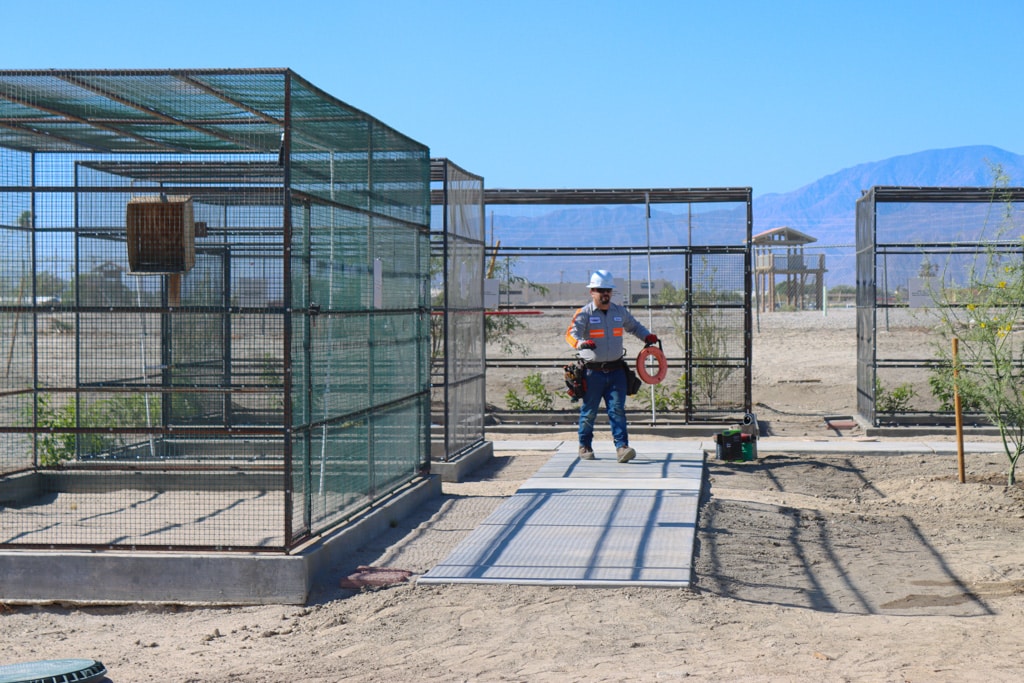
After years without a dedicated wildlife rehabilitation facility, the Desert Wildlife Center held its ribbon cutting Thursday, reintroducing wildlife care into the Coachella Valley.
The center, a renovation of the former Wild Bird Center in Indio that closed in 2023, will be the only certified wildlife rehabilitation facility in the region once it receives final state approval in a few weeks.
Without a dedicated wildlife center, valley residents would take injured wildlife to the Living Desert in Palm Desert, which used to have a wildlife rehab facility. It now works solely with wild desert tortoise rescues.
Locals also sometimes drop wildlife off at nearby animal shelters, like the Palm Springs Animal Shelter.
“We would see small amounts [of wildlife] that would actually be dropped off at the shelter. But it doesn’t have the appropriate space, or the expertise on staff to actually do the rehab,” said Dan Rossi, executive director of the nonprofit Greater Palm Springs Animal Allies. The nearest certified wildlife rehabilitation facility is in Cherry Valley.
The Allies, formerly known as the Friends of the Palm Springs Animal Shelter, run the operations at the shelter and the new wildlife center.
“Strategically, it’s always been in the interest and goals of the nonprofit to help wildlife as well,” Rossi said.
The center was first announced last summer. Since then, extensive renovations have taken place to prepare the property for its future animal residents. The facility had to be redesigned from the ground up to meet strict state standards.
“We tore out all of the existing walls, reconfigured everything to the new standards,” he said. Specialized equipment was put in, and a treatment and drop-off area was also designed.
“We put in very heavy-duty materials that will withstand the disinfecting and cleaning that needs to happen. We put in all commercial-grade equipment to withstand the level of rehab and the number of animals we’re going to have.”
The need is great. Mikah Curtis, director of the Desert Wildlife Center and a registered veterinary technician, estimates that anywhere from 80 to 100 animals will be in their care at any given time.
The center will officially open at the tail end of the busy season for wildlife rehabilitation. Curtis said March to August are the busiest months for wildlife centers.
“Because Mom and Dad are out looking for love. They’re roaming, they’re more likely to get hit by a car or fly into a window, or be attacked by a cat or dog,” he said. Plus, spring is baby season, and abandoned or injured baby birds need care.
Curtis wants residents to know to watch out for fledgling and hatchling birds. He said well-meaning animal lovers see a baby bird on the ground and bring it in, expecting it to be injured.
“The reality is, if it’s this time of year, it’s probably a fledgling that’s on the ground because it’s learning how to fly. Its parents are most likely right nearby,” he said.
For now, the facility is set up to accept only wild birds. Still, it will eventually expand to house and rehabilitate desert reptiles and mammals. It will also train volunteers to act as rescue teams who can go out into the field and deal with animals like venomous snakes, rabies vector species, and predators.
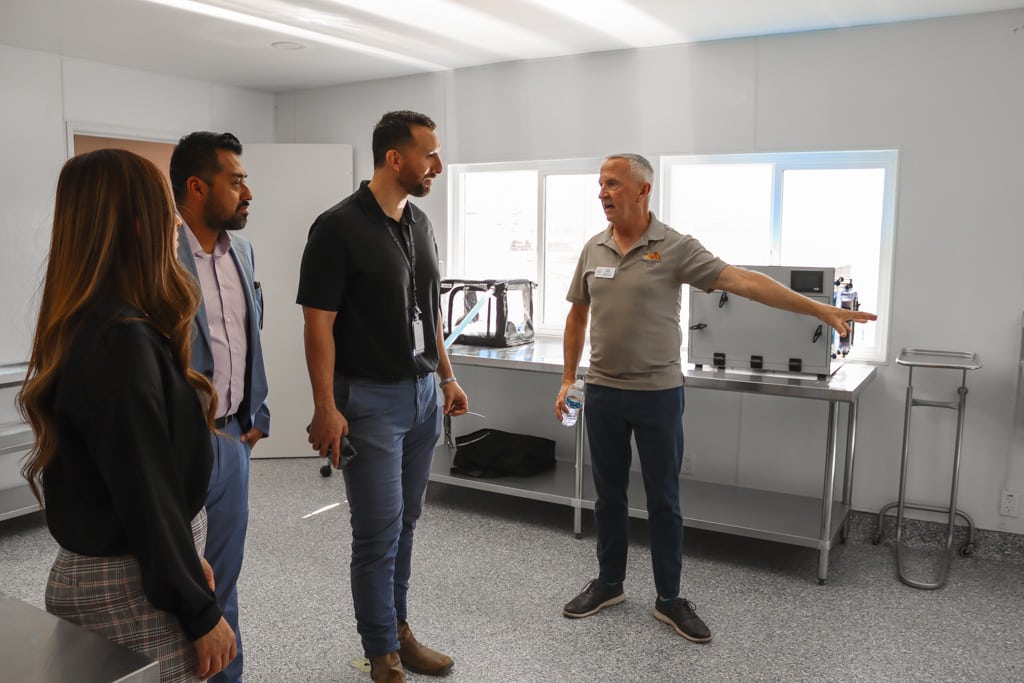
Even before the center officially opened, it had already been doing good work in the community. It operates a wildlife helpline that received about 200 calls in March and helped a baby owlet that had been blown from its nest after a windstorm in Desert Hot Springs.
Part of the center’s service to the community will be its educational outreach. The center is not a zoo or public exhibition space, but it plans to use its time to educate locals, both young and old.
Curtis said he wants to start with the young kids so they can really absorb the lessons about wildlife conservation.
“If we don’t bring in this next generation, there’s not going to be wildlife warriors that are going to help take on this fight,” he said.
Education is vital because Curtis estimates that about 80% of the animals in rehab centers are there due to human causes.
“Window strikes, dog and cat attacks, that’s us,” he said. “Garden netting, glue traps, poisons, oil spills, all that is our fault.”
Education also means reaching out to cities, homeowners’ associations, and golf courses to encourage them to use more humane ways to deter mice, rats, and other vermin.
“If a rat is poisoned, it’s going to get eaten by an owl, which will be poisoned and then eaten by a bobcat,” he said. “It’s a horrible cycle.” The danger from poison extends to toddlers and household pets who could potentially access the poison.
Curtis knows nobody wants vermin around, so he suggests other options, such as native plants that deter mice, rats, and other pests or even a backyard owl box.
The center’s agenda includes education, animal rescue and rehabilitation, and more. The cost of running the operation will be high. Legally, municipalities have to create animal shelters for domestic animals, but those contracts don’t include wildlife.
“Depending on the amount of animals that we see, we expect our operational costs to be somewhere between $400,000 and $600,000 a year,” Rossi said. The center is reliant on donations and grants.
“We are really relying on the goodness of wildlife advocates and animal lovers out there to help support the services and the mission here.”
Author

Related Articles

Indio to break ground on electrical upgrade to solve power struggles
The Avenue 42 project aims to unlock more residential and commercial development by expanding electrical capacity.
Indio moves to tighten rules for vacant commercial buildings
Councilmembers want more options to hold property owners accountable for empty commercial buildings.

Monroe Street interchange project delayed again, supervisors push deadline back another year
The project is still moving forward, but county officials had to vote to delay a construction deadline to keep funding in place.