
Coachella Valley’s water supply is holding — for now
The region’s underground water bank grew by 137,000 acre-feet last year, but a dry precipitation season and rising urban demand are putting the long-term sustainability plan to the test.
The underground water supply that millions of Coachella Valley residents, farms, and businesses depend on grew by 137,052 acre-feet during the most recent water year, according to a new annual report — but the gains came largely from imported water, not rainfall.
The Indio Subbasin Annual Report for Water Year 2024-2025, covering Oct. 1, 2024, through Sept. 30, 2025, was received and filed by the Indio City Council on Wednesday and found that precipitation across the valley averaged just 4.2 inches during the water year — roughly 60 percent of the long-term average — making it a hydrologically below-average year.
With less rain falling, the basin’s gains depended heavily on managed replenishment using imported water. The Whitewater River Groundwater Replenishment Facility recharged approximately 252,539 acre-feet, about 10% less than the prior water year but still well above levels seen during the dry year of 2021-2022.
Natural inflow from mountain runoff and streamflow totaled just 21,841 acre-feet — less than half the long-term annual average of 45,953 acre-feet.
On the demand side, total groundwater extracted from the Indio subbasin reached 272,629 acre-feet, a 2% increase over the prior year. Urban water use — which includes municipal customers, golf courses, and other recreational users — climbed by 12,989 acre-feet, or 5.8%, compared to the year before.
Agricultural use declined by 6,935 acre-feet, or about 17.5 percent, while industrial consumption fell sharply after Green Leaf Power suspended operations, dropping from 1,808 acre-feet the prior year to 888 acre-feet.
Despite the dry conditions and rising urban demand, all 57 key monitoring wells across the subbasin remained above their minimum sustainability thresholds, indicating that the chronic lowering of groundwater levels, depletion of storage, and potential land subsidence are not occurring.
The report is a regulatory requirement under California’s Sustainable Groundwater Management Act of 2014 and is submitted annually to the State Department of Water Resources.
Author

Related Articles
Indio City Council approves $485 million budget, greenlights five-year infrastructure plan
Highlights from the city’s budget and Capital Improvement Program include I-10 interchange upgrades on Monroe and Jackson streets, a new police headquarters, and plans for a skate park.
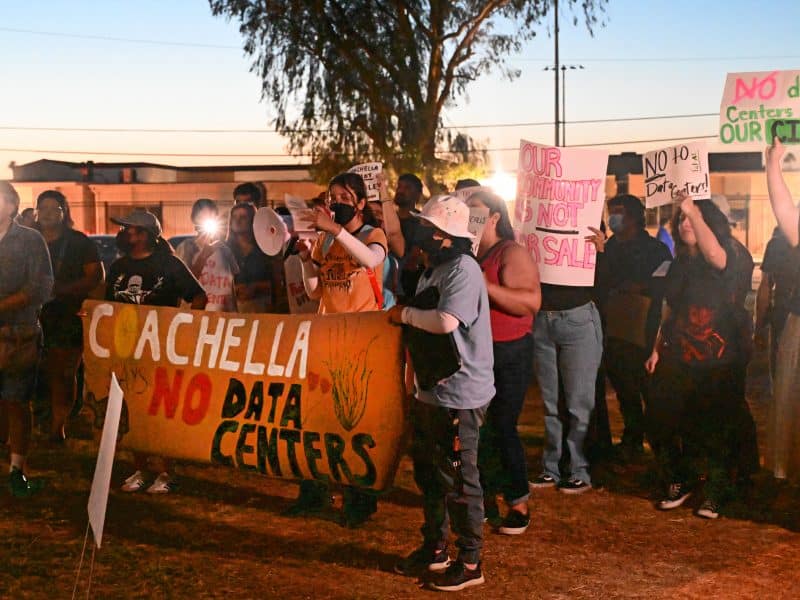
Indio enacts emergency ban on data centers as city works to craft long-term policy
Indio halts new data centers for 45 days as residents in neighboring Coachella protest massive tech campuses over water and power concerns.

Indio Planning Commission rejects warehouse project totaling 1.8 million square feet and up to 3,000 housing units
The 183-acre Oasis at Indio project planned for land in the northern part of the city was denied by a 3-2 vote Wednesday night after almost an hour of public comment.